
Your Instagram feed is probably full of mobility routines. Fancy-looking drills with resistance bands, loaded stretches, 90/90 hip switches, and elaborate warm-ups that take longer than the actual workout. Everyone’s telling you that you need better mobility for performance, injury prevention, longevity.
But here’s what I see in the clinic across Liverpool and Chester: most people don’t have a mobility problem. They have a strength problem. They can passively get into positions just fine when someone pushes them there, but they can’t control those ranges when they’re actually moving under load. That’s not a flexibility issue. That’s a mobility issue. And the two are not the same thing.
Flexibility is passive range of motion; mobility is active, controlled movement through that range. For performance and injury prevention, mobility matters more — because your body needs to be strong in the positions it moves through, not just able to reach them.
Let me explain the difference, why it matters, and how to figure out what you actually need.
What’s the Difference Between Flexibility and Mobility?
This isn’t just semantics. The distinction matters because it changes what you should be doing.
Flexibility is your passive range of motion. It’s how far your joints can move when an external force is applied. Think lying on your back while someone pushes your leg toward your head. If you can get into a full splits position when gravity or a training partner pushes you there, you’re flexible.
Mobility is your active, usable range of motion under control. It’s how far you can move through a range and actually do something useful in that position. If you can actively lift your leg up to chest height and hold it there, if you can squat to full depth with good form and stand back up, if you can control your shoulder through a full overhead range with a barbell, you’ve got mobility.
You can be very flexible and have terrible mobility. I see this all the time. Someone can sit in a deep passive stretch, but when they try to squat with load, they fold forward, lose tension, and can’t get out of the hole. That’s because flexibility without strength is just instability waiting to happen.
Flexibility
Definition: Passive range of motion when an external force is applied. When you need it: Rarely. Only if you genuinely can't access a range required for your sport or movement. How to train it: Static stretching (hold 30-60 seconds), PNF stretching, passive mobility work. Common mistakes: Doing it before sport (reduces power output), overdoing it if you're already hypermobile, thinking it prevents injuries (it doesn't).
Mobility
Definition: Active, controlled range of motion you can use under load. When you need it: For every movement pattern in your sport or training. How to train it: Loaded stretching, controlled articular rotations (CARs), end-range strength work, movement-specific drills. Common mistakes: Confusing it with flexibility, doing fancy Instagram drills that don't transfer to your actual activities, neglecting the strength component.
Most People Don’t Need More Flexibility
Here’s the uncomfortable truth: if you can already get into the positions your sport or training demands when someone assists you, more passive stretching won’t help your performance. It might even hurt it.
The research on static stretching before sport is pretty clear. It doesn’t prevent injuries. A 2012 systematic review by Kay & Blazevich in the Scandinavian Journal of Medicine & Science in Sports showed that static stretching before exercise reduces force production by 5-8%. Not ideal if you’re about to sprint, jump, or lift. Meanwhile, Lauersen et al. (2014) found that stretching alone showed no significant injury prevention effect, while strength training reduced injuries by 68%.
I see this every week in Queensferry. Footballers spending 20 minutes stretching their hamstrings before a match, then wondering why they feel sluggish in the first 15 minutes. Gym-goers doing long passive hip stretches before squats, then struggling with stability at depth. They’ve told their nervous system to relax into those ranges. Then they’re asking it to produce force in those same ranges. It doesn’t work well.
The evidence points toward dynamic warm-ups instead. Movement-based preparation that takes your joints through the ranges you’re about to use, with control and progressive load. That’s what actually prepares you to perform. I’ve written more about effective warm-up protocols in my piece on warm-ups that actually prevent injuries.
If you’re already hypermobile (joints move beyond normal ranges easily), adding more passive stretching can make you less stable and more prone to injury. Some people need less flexibility work and more strength work to control the range they already have. If you can easily touch your toes, do the splits, or bend your fingers back to your wrist, you probably don’t need more stretching. You need strength at end-range.
When You Actually Need More Range of Motion
I’m not saying range of motion work is useless. There are absolutely times when you genuinely need more range to function properly.
You Can't Achieve the Position at All
If you physically cannot squat to depth even with assistance, cannot raise your arm overhead without compensating through your spine, or cannot achieve a basic movement pattern your sport requires, you have a genuine restriction. This needs addressing. But the fix is usually mobility work (active control), not just stretching.
Asymmetry Is Causing Compensation
If one hip has significantly less internal rotation than the other and you're compensating by rotating through your lower back every time you change direction, that's a problem worth fixing. The goal isn't perfect symmetry, but reducing compensation patterns that overload other areas.
Recent Injury or Surgery
If you've had frozen shoulder, hip impingement surgery, or a significant joint injury, you've probably lost range. Getting that back through targeted [follow-up treatment](/services/follow-up-treatment) with mobility and strength work is essential. But even here, passive stretching alone won't cut it. You need to rebuild strength through that range.
Sport-Specific Range Requirements
If you're a weightlifter who needs a full overhead squat, a martial artist who needs high kicks, or a swimmer who needs extreme shoulder mobility, you might genuinely need more range than the average person. But even then, you need strength in that range, not just the ability to be pushed into it.
I see a lot of genuine restrictions in the clinic. Frozen shoulder cases where the capsule has actually tightened. Hip impingement where the anatomy limits how far the joint can move. Ankle stiffness after repeated sprains. These need proper assessment and treatment, not just random Instagram mobility flows.
The Hypermobility Trap
Here’s something that doesn’t get talked about enough: some people are already too flexible. If you’re hypermobile, every influencer telling you to improve your mobility is giving you exactly the wrong advice.
Hypermobility means your joints move beyond normal ranges easily. Your elbows or knees might hyperextend, you can probably touch your toes without warming up, maybe you can bend your thumb back to your wrist. It’s relatively common, especially in women, and it’s often presented as a good thing. “Look how flexible I am!”
But hypermobility without strength is instability. Your joints rely more on muscular control because your ligaments are providing less passive restraint. If you keep doing passive stretching and mobility flows that prioritise range over control, you’re making yourself less stable.
I see this in Merseyside gyms fairly often. Someone with hypermobile shoulders doing loaded stretches and banded distractions to “improve mobility,” then developing shoulder pain during pressing movements because they’re unstable in those ranges. The fix isn’t more range. It’s strength and motor control in the range they already have.
If this sounds like you, your training should emphasise end-range strength work, controlled eccentrics, and stability drills. Not more passive stretching.
What Actually Improves Functional Mobility
If you’ve determined you genuinely need more usable range, here’s what the evidence and my clinical experience suggest actually works.
Loaded stretching beats passive stretching. Instead of sitting in a static stretch, add load. A goblet squat held at depth does more for your hip and ankle mobility than lying on your back pulling your knee to your chest. A Jefferson curl with light load does more for your hamstring mobility than passive toe touches. You’re building strength in lengthened positions, which is exactly what mobility is.
Controlled articular rotations (CARs) build motor control. These are slow, deliberate movements through the full range of a joint, under your active control, without momentum or compensation. They teach your nervous system that you own that range. A hip CAR where you actively lift your knee up, rotate it out and around in a circle, and bring it back down with control is worth more than 20 minutes of passive hip stretching.
End-range strength work fills the gaps. If you struggle with depth in your squat, pause squats at the bottom with lighter load teach you to own that position. If your overhead position is weak, bottoms-up kettlebell presses force you to stabilise in that range. You’re not just accessing the range. You’re learning to use it.
Movement-specific work transfers better than generic drills. If you need better squat mobility, squat variations and squat-specific mobility drills will help you more than lying on your back doing 90/90 hip switches. Specificity matters. Your nervous system is incredibly context-dependent. Getting better at one movement doesn’t automatically transfer to another unless they’re very similar.
The fancy Instagram mobility routines often fail here. They look impressive, but they don’t match the demands of your actual training or sport. If your goal is a better squat, and you’re spending 30 minutes doing banded hip distractions and elaborate floor flows, you’re probably wasting time. Just squat more, with good coaching, and do mobility work that looks like squatting.
How to Assess Your Own Mobility
Before you start adding more mobility work, figure out if you actually need it. Here’s a simple framework I use in the clinic.
Can you achieve the positions your sport or training requires? If you’re a runner and you can achieve a full running stride, you probably don’t need more hip mobility. If you’re a gym-goer and you can squat to depth, overhead press without arching your lower back excessively, and hinge properly, you probably have enough mobility for your needs.
Are you compensating to get into positions? If you’re squatting but your lower back rounds at the bottom, or you’re overhead pressing but your ribs flare and your back arches, you might have a mobility restriction forcing compensation. But often, that’s not a flexibility issue. It’s a motor control or strength issue. You need coaching or strength work, not more stretching.
Is pain or stiffness limiting you? If you genuinely feel restricted, tight, or painful in certain ranges, that’s worth investigating. But don’t assume the fix is stretching. It might be strength, it might be motor control, it might be an actual structural issue that needs proper assessment.
If you’re not sure, book in for an assessment. I work out of my clinic in Chester, and this is exactly the kind of thing we assess in an initial session. We’ll look at your movement patterns, identify restrictions, and figure out whether you need more range, more strength, or just better motor control.
Practical Recommendations
If you’ve read this far and you’re thinking, “Okay, so what should I actually do?” — here’s my practical advice.
Stop doing long static stretching before training or sport. Save it for dedicated flexibility sessions if you enjoy it, but don’t do it as part of your warm-up. It reduces power output and doesn’t prevent injury. Use a dynamic warm-up instead, something that moves you through the ranges you’re about to use with progressive intensity.
If you need more range, prioritise loaded mobility work over passive stretching. Goblet squats, Jefferson curls, bottoms-up carries, pause work at end-range, CARs. These build strength and control in the ranges you’re trying to access. Passive stretching might feel good, but it doesn’t transfer to performance.
If you’re hypermobile, focus on stability and strength, not more range. You don’t need another yoga class. You need strength training with good form and control, especially in end-range positions.
Be honest about whether you actually have a restriction. If you can already get into the positions your training or sport requires, more mobility work won’t help. You’re better off spending that time getting stronger, more powerful, or more skilled.
If you’re dealing with genuine restrictions, get them assessed properly. Conditions like frozen shoulder, hip impingement, or chronic ankle stiffness need proper diagnosis and treatment, not guesswork based on Instagram posts.
And if you’re still not sure where you sit, or you’ve been doing mobility work for months without improvement, come get assessed. Mobility problems are rarely just mobility problems. There’s usually something else going on. Motor control issues, compensatory patterns, old injuries that haven’t been addressed, or sometimes just poor exercise selection. A proper assessment will figure out what’s actually limiting you and what will actually help.
You can book an initial assessment through my follow-up treatment page, or if you want a deeper dive into how I assess and treat these issues, I’ve covered it in my piece on common gym injuries and how to avoid them.
The Bottom Line
Mobility and flexibility are not the same thing. Most people don’t need more passive flexibility. They need more active mobility — strength and control in the ranges they already have or the ranges they actually need.
Stop chasing arbitrary ranges because someone on Instagram told you that you should be able to do a splits or put your foot behind your head. Focus on whether you can do the things your sport or training actually demands, with control, under load, without compensation.
And if you can, you’re probably fine. Spend your time getting stronger, not more flexible.
Related Articles
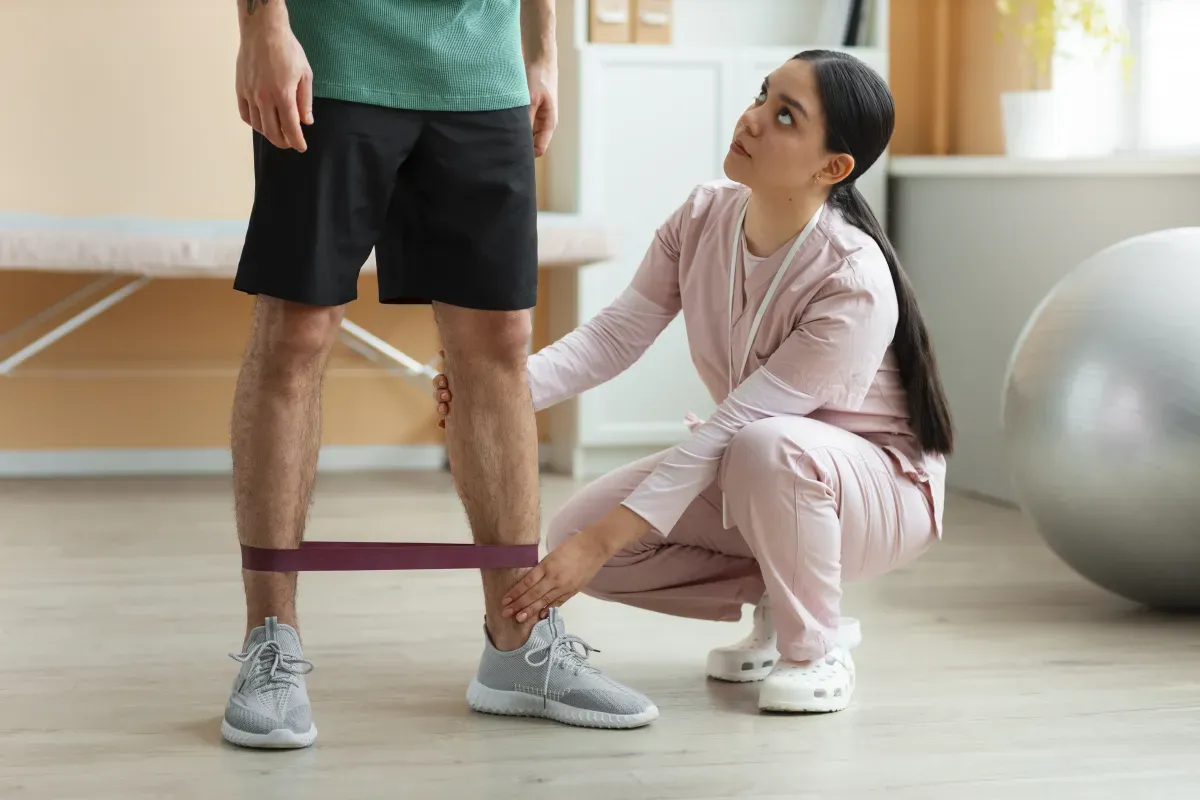
Rehab Exercises vs Gym Exercises — Why They're Not the Same Thing
Your physio gave you a resistance band and 3 exercises. You want to get back to deadlifts. Are rehab exercises 'real' training? When to progress from rehab to gym — and why skipping rehab costs you in the long run.

The Warm-Up That Actually Prevents Injuries (Based on Evidence)
5 minutes of jogging and a few static stretches isn't a warm-up. Here's what an evidence-based warm-up actually looks like — and why it cuts injury rates by up to 50%.

Why Strength Training Is the Best Injury Prevention
Stronger tissues are harder to injure. It's that simple. Why every athlete, runner, desk worker, and weekend warrior should be strength training — and what 'strength training' actually means.