
I see the same injuries walk through the door every week. Shoulder pain from bench pressing. Lower back strain from deadlifts. Knee complaints after heavy squats. The frustrating part isn’t that people are getting injured — it’s that most of these issues are completely preventable.
You don’t need to stop training. You need to understand why these injuries happen and what you’re actually doing wrong. Because here’s the truth: the exercises aren’t the problem. The way you’re doing them is.
Most gym injuries stem from three things: progressing too fast, poor technique under fatigue, and skipping warm-ups. Manage your training load sensibly, and you’ll avoid the vast majority of gym-related pain.
Let me walk you through the five most common gym injuries I treat at my clinic in Chester, why they really happen, and what you can actually do about them.
The 5 Most Common Gym Injuries
Shoulder Impingement
Usually from bench press or overhead work. Not a structural problem — it's a load tolerance issue that happens when you increase volume or weight too quickly.
Lower Back Strain
Deadlifts and squats get blamed, but bad technique and ego lifting are the real culprits. Your back is strong — you're just asking it to do things it's not prepared for.
Knee Pain
Squats, lunges, leg press. The depth and stance width matter less than people think. Load management and training volume are what actually break knees.
Tennis Elbow
Grip-heavy movements like pull-ups, rows, and heavy curls. Tendon overload from doing too much, too soon, with inadequate recovery.
Wrist Pain
Front rack positions, heavy pressing, excessive wrist extension under load. Often ignored until it limits everything you do in the gym.
Shoulder Pain: The Impingement Myth
If you’ve ever had shoulder pain from bench pressing or overhead work, you’ve probably been told you have “impingement” — that something’s getting pinched in your shoulder and you need to stop doing certain movements forever.
Here’s what I actually see: most shoulder pain in the gym isn’t a structural pinch. It’s a load tolerance problem. You increased your bench press volume too quickly. You added an extra overhead session without building up to it. You went from 3 sets to 5 sets overnight because you felt good that day.
Your shoulder can handle a lot. But it needs time to adapt. When you exceed its current capacity — either through too much volume, too much weight, or both — it starts to complain. That’s not impingement. That’s your body telling you to back off and build capacity more gradually.
What actually helps:
- Reduce training volume by 30-40% and rebuild slowly
- Keep the painful movement in your program but at a tolerable load
- Add rotator cuff work (yes, it’s boring, but it works)
- Check your bench press setup — elbows flared to 90 degrees is asking for trouble
I work with plenty of lifters across Cheshire who’ve been told to stop benching forever. They’re all benching now. We just had to build tolerance back up intelligently instead of pretending the movement was the enemy.
For persistent shoulder issues, check out our guide on shoulder pain or learn more about rotator cuff injuries.
Lower Back Pain: Bad Deadlifts vs. Deadlifts Being Bad
Let me be clear: deadlifts are not bad for your back. Bad deadlifts are bad for your back.
The difference is technique, load selection, and respecting your current capacity. If you’re rounding through your lower back under heavy load, if you’re yanking the bar off the floor, if you’re adding 10kg every week because your mate is — yeah, you’re going to hurt yourself.
Your lower back is incredibly strong. It’s designed to handle load. But it’s not designed to handle poorly executed load or sudden jumps in training stress that it hasn’t been prepared for.
The most common mistakes I see:
- Starting with the hips too high — this turns a deadlift into a stiff-leg deadlift with a rounded back
- Losing tension before the pull — you should be pulling the slack out of the bar before it leaves the floor
- Ego lifting — grinding out ugly reps because you want to hit a number
- Ignoring the warm-up — going from zero to working weight without ramping up
That slight twinge in your lower back after deadlifts? That’s not normal. It’s not something to train through. It’s your body telling you that your technique, load, or volume has exceeded your current capacity. Address it now — don’t wait until you can’t tie your shoes.
If you’re dealing with ongoing back issues, have a look at our back pain treatment page for what actually works.
Knee Pain: What Actually Matters
There’s a lot of mythology around knee pain and squats. People obsess over whether their knees go past their toes, whether they should squat to parallel or below, whether their stance should be narrow or wide.
Here’s what actually matters: load and volume management.
I’ve treated people across Chester and North Wales who’ve been told they can’t squat deep, can’t let their knees track forward, can’t do lunges. Most of them are doing all of those things now. The issue wasn’t the movement pattern — it was that they were doing too much of it, too heavily, without adequate preparation.
Knee pain in the gym usually comes down to one of three things:
- You increased volume too quickly — went from 3 sets to 6 sets because you’re chasing gains
- You added load too aggressively — jumped 10kg instead of 2.5kg
- You ignored fatigue — kept pushing through sessions when your body was already overloaded
Your knees can handle depth. They can handle your knees going forward. They can handle heavy loads. What they can’t handle is all of that at once without progressive adaptation.
The Ego Lifting Problem
Let’s talk about the elephant in the gym: training to impress rather than training to progress.
I see it constantly. Someone hits a new PR, feels good, then tries to repeat it the next week. Or they see someone else lifting heavier and feel like they should be there too. Or they’re posting their lifts online and don’t want to look weak.
This is how injuries happen. Not because the exercise is dangerous. Not because you have “bad genetics” or a “weak shoulder.” But because you’re prioritizing your ego over progressive overload.
Progressive overload means small, consistent increases over time. It means adding 2.5kg, not 10kg. It means adding one extra set per week, not three. It means respecting deload weeks and training phases instead of going hard every single session.
Research shows that when strength training is done correctly with proper progression, it reduces overall injury risk by 68% (Lauersen et al., 2014). The problem isn’t the lifting — it’s the ego driving poor decisions.
Here’s a practical framework:
- Increase weight by 2.5kg per week maximum (less for upper body movements)
- Add volume (sets/reps) by no more than 10% per week
- Program a deload week every 4-6 weeks where you drop volume by 40-50%
- Rotate exercises every 8-12 weeks to prevent overuse injuries
Training Around Pain: Modification, Not Elimination
One of the biggest mistakes people make when they get injured is stopping training entirely. You don’t need to stop. You need to modify.
Let’s say your shoulder hurts on bench press. That doesn’t mean you can’t press. It means you can’t press at your current load and volume. Drop the weight by 30-40%, reduce your sets, and see if you can train pain-free at that level. Then build back up slowly.
Or let’s say deadlifts aggravate your lower back. Can you trap bar deadlift pain-free? Can you Romanian deadlift? Can you do rack pulls from knee height? There’s almost always a variation that lets you continue loading the pattern while respecting your current capacity.
Use the traffic light system: Green = pain-free, keep going. Amber = slight discomfort but not worsening, proceed cautiously. Red = sharp pain or pain that lingers after training, stop and modify. Your goal is to keep as much training in the green zone as possible while your body adapts.
The goal isn’t to avoid discomfort forever. It’s to find a tolerable level of training stress, maintain that for 2-3 weeks, then gradually increase it. This is how you build resilience. This is how you get back to your previous training levels. This is how you avoid the injury happening again.
If you’re struggling with modifications or unsure what’s safe, this is exactly what we help people figure out in the clinic.
Warm-Up Sets Aren’t Optional
I’ll keep this simple: if you’re not doing proper warm-up sets, you’re increasing your injury risk.
A warm-up isn’t stretching for 30 seconds and calling it done. It’s gradually ramping up to your working weight so that your muscles, tendons, and nervous system are actually prepared for the load you’re about to ask them to handle. Research shows that static stretching before lifting actually reduces force production (Kay & Blazevich, 2012), while dynamic warm-ups are far more effective.
Example warm-up for a 100kg working set on bench press:
- Empty bar x 10 reps
- 40kg x 8 reps
- 60kg x 5 reps
- 80kg x 3 reps
- 90kg x 1 rep
- 100kg x working sets
Yes, this takes time. Yes, it feels like you’re not doing “real” work. But this is injury prevention. This is how you stay in the gym long-term instead of spending six weeks out with a shoulder or back issue that could’ve been avoided.
For more on movement preparation and why it matters, read our piece on mobility vs. flexibility.
When to Get Help
You don’t need to see a physio for every bit of muscle soreness or minor ache. But you should get help if:
- Pain persists beyond 7-10 days despite modifying training
- Pain is getting worse instead of better
- You’ve tried reducing load and volume but still can’t train pain-free
- The injury is limiting your daily activities, not just your gym work
- You’ve had the same injury multiple times and it keeps coming back
A good physio won’t tell you to stop training. We’ll help you figure out what’s causing the problem, what load you can currently tolerate, and how to progressively build back to where you were.
If you’re in Liverpool, Chester, Queensferry, or anywhere across Cheshire and North Wales, that’s exactly what I do. We assess the issue, figure out what you can still do, and build a plan to get you back to full training capacity.
You can book an assessment online or message me directly if you want to discuss your situation first.
Final Thoughts
Most gym injuries aren’t bad luck. They’re predictable consequences of poor programming, ego lifting, and ignoring early warning signs. The exercises aren’t the problem — deadlifts don’t destroy backs, squats don’t ruin knees, and bench press doesn’t wreck shoulders.
What does cause injuries is doing too much, too soon, with too little respect for progressive adaptation.
Train smart. Manage your load. Respect the warm-up. Modify when needed. And if something’s not improving after a week or two of sensible training adjustments, get it looked at before it becomes a bigger problem.
You don’t need to stop training. You just need to train intelligently.
Related Articles

Swimming Injuries — Shoulder, Back, and What Your Stroke Is Doing Wrong
Swimmer's shoulder is the most common pool injury, but it's not the only one. A breakdown of swimming injuries by stroke, what's causing them, and how to keep training without making things worse.

Why Desk Workers Get the Same Injuries as Athletes
You don't need to be a footballer to get a repetitive strain injury. Desk workers develop the same tendon, back, and neck problems as athletes — just from different loads. Here's why and what to do about it.
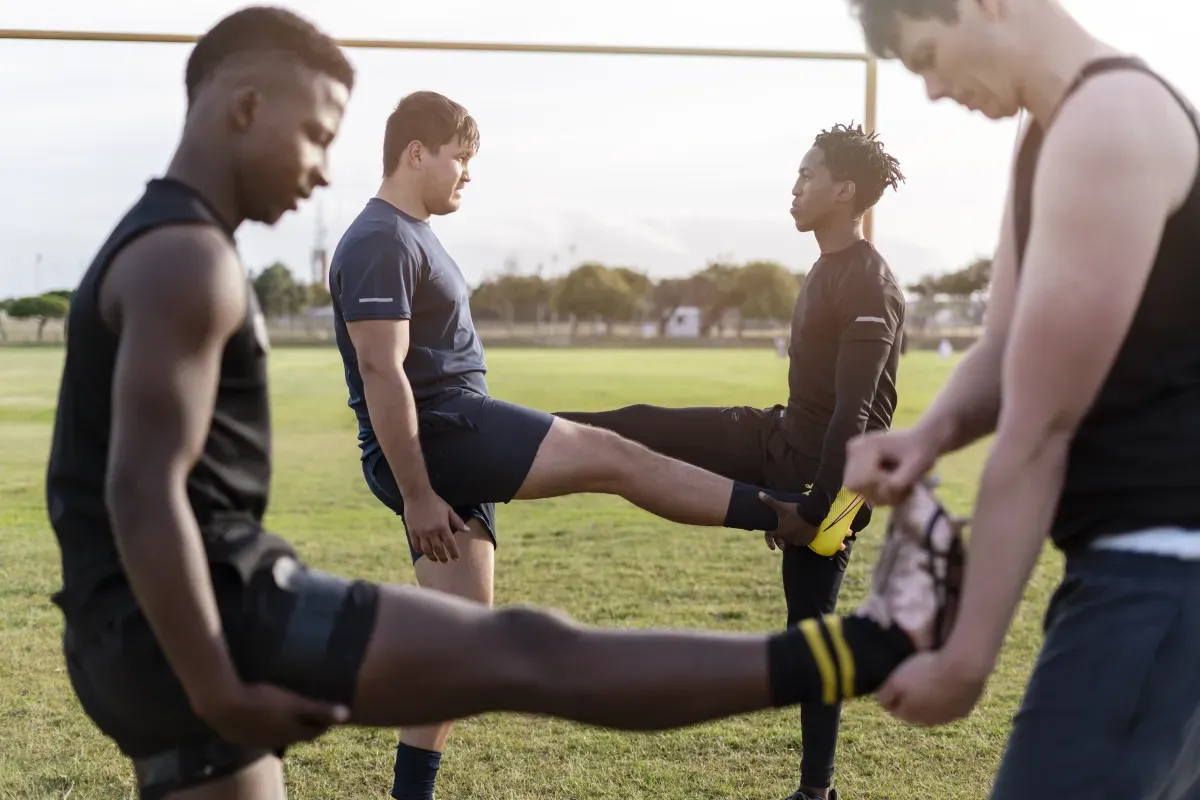
Pre-Season Injury Prevention for Football and Rugby Players
Pre-season is where injuries are made or prevented. A physiotherapist's guide to preparing your body for football and rugby — covering the exercises, load management, and common mistakes.